FR.6 - Update Leashing Law Enforcement Language
View full title
AN ORDINANCE OF THE MIAMI CITY COMMISSION AMENDING CHAPTER 6/ARTICLE I OF THE CODE OF THE CITY OF MIAMI, FLORIDA, AS AMENDED ("CITY CODE"), TITLED "ANIMALS/IN GENERAL," AND CHAPTER 6/ARTICLE II OF THE CITY CODE, TITLED "ANIMALS/DOGS AND CATS," TO PROVIDE FOR UPDATED LANGUAGE REGARDING ENFORCEMENT OF LEASHING LAWS FOR DOMESTICATED ANIMALS ON PUBLIC AND PRIVATE PROPERTY AND TO UPDATE DEFINITIONS TO MEET CURRENT CODIFIED AND STATUTORY DEFINITIONS FROM BOTH MIAMI-DADE COUNTY AND THE STATE OF FLORIDA; CONTAINING A SEVERABILITY CLAUSE; AND PROVIDING FOR AN IMMEDIATE EFFECTIVE DATE.
October 22, 2026
Sponsors

Mayor Eileen T. Higgins

Commissioner Miguel Angel Gabela (D1)

Commissioner Damian Pardo (D2)
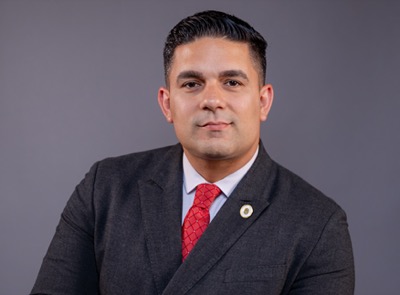
Commissioner Rolando Escalona (D3)

Commissioner Ralph "Rafael" Rosado (D4)

Commissioner Christine King (D5)
Vote Details
PASSED ON FIRST READING WITH MODIFICATION(S)
Motion to: Pass on First Reading with Modification(s)
Mover: Christine King, Commissioner
Seconder: Rolando Escalona, Commissioner
Ayes (5):
Gabela, Pardo, Escalona, Rosado, King
Department: Commissioners and Mayor
Category: Elected Official Item
WHEREAS, Section 6-2(a) of the Code of the City of Miami, Florida, as amended (“City Code”), provides “No animal kept, harbored, maintained or possessed by any person in the city shall be permitted to run at large or to remain in or upon public or private property unless the animal is under the actual or direct control of its keeper by a rope, chain, leash or suitable device, or is kept within an enclosed area capable of preventing the animal from escaping therefrom. Any person owning, possessing or having control or custody of any animal shall be held strictly responsible for compliance with this Section, and it shall be no defense to a prosecution under this Section that the defendant did not personally allow, permit or countenance the animal to run at large or roam in the City.”; and
WHEREAS, currently Section 6-2(b) of the City Code, states “\[t\]his section shall have no application to dogs and cats, except as limited by section 38-57;” and
WHEREAS, this language may create some confusion as to whether Subsection (a) has any applicability to dogs in the public right-of-way or other public property; and
WHEREAS, Section 6-7 of the City Code, provides for enforcement of Section 6-2 through a citation system for law enforcement officers; and
WHEREAS, the City of Miami’s (“City”) authority to creates laws to protect and provide for local animal control is derived from Section 828.27, Florida Statutes, and Chapter 5 of the Miami-Dade County Code of Ordinances; and
WHEREAS, currently the interchangeable definitions for all three Articles of Chapter 6 are interspersed throughout the entire Chapter and aligning them in one Section will provide clarity and ease of use; and
WHEREAS, it is in interests of City residents to have a clearly established and consistent code of required conduct when it comes to the leash laws of the City;
NOW, THEREFORE, BE IT ORDAINED BY THE COMMISSION OF THE CITY OF MIAMI, FLORIDA:
Section 1. The recitals and findings contained in the Preamble to this Ordinance are adopted by reference and incorporated as if fully set forth in this Section.
Section 2. Chapter 6 of the City Code is further amended in the following particulars:
“CHAPTER 6
ANIMALS
ARTICLE I. IN GENERAL
\*\*\*
Sec. 6-1. Restriction on keeping poultry, fowl or grazing animals.
(a)For the purpose of this section, the terms hereinafter set forth shall be defined as follows here and in Section 6-36:
Fowl:Live guineas, pea fowls, pheasants and pigeons, except carrier and racing pigeons, kept, harbored, bred and maintained exclusively for such purpose.
Grazing animals:Horses, cows, goats, sheep and rabbits.
Poultry:Live chickens, turkeys, ducks and geese.
Poultry markets:Commercial establishments or places properly zoned and licensed where live poultry or fowl are kept temporarily for the purposes of sale.
\*\*\*
Sec. 6-2. - Animals not to run at large; exceptions.
(a)No animal kept, harbored, maintained or possessed by any person in the city shall be permitted to run at large or to remain in or upon public or private property unless the animal is under the actual or direct control of its keeper by a rope, chain, leash or suitable device, or is kept within an enclosed area capable of preventing the animal from escaping therefrom. Any person owning, possessing or having control or custody of any animal shall be held strictly responsible for compliance with this section, and it shall be no defense to a prosecution under this section that the defendant did not personally allow, permit or countenance the animal to run at large or roam in the city.
(b)This section shall have no application to dogs and cats, except as limited by [section 38-57](https://library.municode.com/fl/miami/codes/code_of_ordinances?nodeId=PTIITHCO_CH38PARE_ARTIIUSRE_S38-57DOANPA) Any person owning, possessing or having control or custody of any animal shall be held strictly responsible for compliance with this section, and it shall be no defense to a prosecution under this section that the defendant did not personally allow, permit or countenance the animal to run at large or roam in the city.
(c)A Responsible Party may not:
(1)Allow, whether willfully or through failure to exercise due care or control, a dog into or upon any public park or beach in the City unless specifically authorized by law.
(2)Allow, whether willfully or through failure to exercise due care or control, a dog to commit any Nuisance upon: the sidewalk of any public street; the floor of any common hall in any apartment house, hotel, or other multifamily dwelling; or any entranceway, stairway or wall immediately abutting on a public sidewalk; or the floor of any theatre, shop, store, office building or other building used in common by the public.
(3)Allow, whether willfully or through failure to exercise due care or control, a dog to be unrestrained or to be at large in any manner in or upon: public property; a common area of a private building or development; or the private property of others without the express or implied consent of the property owner. Notwithstanding the foregoing, a dog may be unrestrained and shall not be deemed to be at large if it is supervised by a competent person and is in a park area in which dogs are specifically authorized by law.
(4)Fail to exercise proper care and control of their dog or dogs so as to allow the dog or dogs to become a public threat. Chasing vehicles or persons and trespassing upon public or private property in such a manner as to damage property shall be deemed a public threat.
(d)This Section shall be read in conjunction with Section 38-57 of the Code as it relates to Animals in City Parks.
(e)Exception. Neither this Section nor Chapter shall be construed to limit the intended use, in any way, of Animals meeting the statutory definition of a Service Animal, or use of an Animal for law enforcement purposes by a law enforcement officer.
(f).Enforcement. This Section shall be enforced using Chapter 6, Article III or by any other means allowed by law. No one enforcement method shall exclude another.
\*\*\*
ARTICLE II. DOGS AND CATS
Sec. 6-36. - Definitions.
For the purpose of this article, the following words and phrases shall have the meanings respectfully ascribed to them by this section:
Animalmeans any living dumb creature as defined by Section 828.27(1)(2), Florida Statutes, as amended from time to time.
Animal Control Officermeans a person employed by the City who meets the qualifications set forth in Section 828.27, Florida Statutes. Animal Control Officers shall be authorized to investigate, on public or private property, civil infractions relating to animal control or cruelty, to issue citations for violations of this Chapter, and to assist in criminal investigations relating to animal control or cruelty.
Animal rescue organization:A not for profit organization devoted to the rescue, care, or adoption of stray, abandoned, injured, or surrendered animals and which does not breed animals.
Animal shelter:A public animal shelter or duly incorporated not for profit organization, operated as a bona-fide charitable organization under Section 501(c)(3) of the Internal Revenue Code, devoted to the rescue, care, or adoption of stray, abandoned, injured, or surrendered animals and which does not breed animals.
At Largemeans off the responsible party's property, and not under the responsible party's physical custody and control.
Breeder:Any person or entity that causes dogs or cats to reproduce regardless of the size or number of litters produced. Any person or entity offering male dogs or cats for stud purposes shall be classified as a breeder. It is provided, however, that this classification shall not apply to a hobby breeder as defined in this section or to a pet owner who breeds his or her own pet and keeps all of the offspring so long as the total number of dogs kept on the premises does not constitute a kennel. Any establishment used by a breeder for the breeding of dogs, except for a hobby breeder as defined in this section, shall be regulated as a kennel. Breeders that sell directly to the public shall also be subject to regulation as pet dealers.
Cat:An animal of the Felidae family of the order Carnivora.
Certificate of source:A document from the source declaring the origin of the dog or cat on the premises to be sold or transferred, or offered for sale or transfer, by the pet store. The certificate of source shall include, at minimum:
(1)The name, address, telephone number, and electronic mail address of the source of the dog or cat;
(2)A brief description of the dog or cat, the original source of the dog or cat, and license information if the original source breeder is licensed by the United States Department of Agriculture; and
(3)Shall be signed by both the pet store certifying the accuracy of the certificate of source and by the purchaser or transferee of the dog or cat acknowledging receipt of the certificate of source.
Citationmeans a written notice, issued to a person by an officer, that the officer has probable cause to believe that the person has committed a civil infraction in violation of this chapter and that the county court will hear the charge.
Controlmeans the regulation of possession, ownership, care, and custody of animals.
Crueltymeans any act of neglect, torture, or torment that causes unjustifiable pain or suffering of an animal.
Dog:An animal of the Canidae family of the order Carnivora.
Hobby breeder:A person or entity that is an active member of a national, state, or local breeder organization and that houses or breeds dogs or cats at or adjoining a private residence for the purpose of improving the breed; exhibiting dogs or cats at shows operated by a national, state, or local breeder organization; or raising service animals or animals used for law enforcement or other types of work. A hobby breeder may sell no more than two litters of puppies or kittens per year per household so long as the total number of dogs kept on the premises does not constitute a kennel as defined in this section. A hobby breeder that sells more than two litters per year per household shall be deemed to be a pet dealer.
Kennel:The following uses shall constitute a kennel:
(1)The keeping of any dog or dogs, regardless of number, for sale, boarding, or treatment purposes, except by a hobby breeder as defined in this section or as provided by law, in a dog hospital, dog beauty parlor, pet care center, pet shop, dog racing establishment, governmental agency, laboratory, or facility housing animals for medical research that is approved by a federal agency;
(2)The keeping of dogs six months of age or older on premises used for residential purposes in excess of:
a.Four dogs on property that is less than one acre in gross area or in any individual residence unit in a transect zone that allows multifamily uses;
b.Six dogs on property that is at least one acre but less than two acres in gross area; and
c.Eight dogs on property that is two acres or more in gross area; or
(3)The keeping of more than four guard dogs on vacant property or on property used for business or industrial purposes.
Nuisance for the purposes of this Chapter, shall be defined as defecation and/or urination. If a dog defecates on the grassy swale of a public right-of-way or other such public property, or on private property without the express or implied consent of the property owner, the responsible party shall remove the defecation and deposit it in an appropriate trash receptacle, sanitary disposal unit, or other sealed container.
Officermeans any law enforcement officer defined in F.S. § 943.10 or any veterinarian defined in F.S. § 474.202.
Owner:Any person owning, harboring, or keeping a dog or cat within the city.
Pet dealer:Any person that engages in the sale to the public of dogs or cats regardless of number. This classification shall include pet stores as well as breeders who sell directly to the consumer. Animal rescue organizations and hobby breeders shall be exempt from this classification.
Pet store:A pet shop, pet beauty parlor, animal grooming establishment, pet hospital, or other retail establishment open to the public and engaging in the business of selling pet supplies, services, or animals at retail or wholesale prices.
Pet store operator:A person who owns or operates a pet store.
Responsible Partymeans any person owning, harboring, or having custody or control of an Animal. Wherever the term "owner" is used in this Chapter, it shall mean Responsible Party.
Retail sale:The display, offer for adoption, barter, auction, give away, or other transfer of any dog or cat.
Service Animalmeans any dog or other specified animal that is individually trained to do work or perform tasks for the benefit of an individual with a disability (as defined in the Americans with Disabilities Act of 1990, 42 U.S.C. § 12102, and in 28 C.F.R. § 35.104, as may be amended from time to time).
\*\*\*
ARTICLE III. ENFORCEMENT
Sec. 6-71. - Citation system for animal control.
(a)For the purposes of this article, the terms hereinafter set forth shall be defined as follows provided for in Section 6-36 of the Code:.
Animalmeans any living dumb creature.
Animal control officermeansany person employed or appointed by the city who is authorized to investigate, on public or private property, civil infractions relating to animal control or cruelty and to issue citations as provided in this article. An animal control officer is not authorized to bear arms or make arrests.
Citationmeans a written notice, issued to a person by an officer, that the officer has probable cause to believe that the person has committed a civil infraction in violation of this chapter and that the county court will hear the charge. The citation shall contain:
(1)The date and time of issuance.
(2)The name and address of the person.
(3)The date and time the civil infraction was committed.
(4)The facts constituting probable cause.
(5)The ordinance violated.
(6)The name and authority of the officer.
(7)The procedure for the person to follow in order to pay the civil penalty or to contest the citation.
(8)The applicable civil penalty if the person elects to contest the citation.
(9)The applicable civil penalty if the person elects not to contest the citation.
(10)A conspicuous statement that if the person fails to pay the civil penalty within the time allowed, or fails to appear in court to contest the citation, he/she shall be deemed to have waived his/her right to contest the citation and that, in such case, judgment may be entered against the person for an amount up to the maximum civil penalty.
Controlmeans the regulation of the possession, ownership, care, and custody of animals.
Crueltymeans any act of neglect, torture, or torment that causes unjustifiable pain or suffering of an animal.
Officermeans any law enforcement officer defined in F.S. § 943.10 or any veterinarian defined in F.S. § 474.202.
(b)All Citations shall be noticed in accordance with Section 2-823(d) of the Code or as a Civil Citation under the rules and regulations of Chapter 5 of the Miami-Dade County Code of Ordinances Any person violating any of the provisions of this chapter shall be deemed guilty of a civil infraction. During a one-year period, each violation of this chapter shall constitute a separate offense. Violations of this chapter shall be enforced as follows:
(c)Citations shall only be issued by City personnel authorized by Statute, County Code or City Code.
Any person violating any of the provisions of this chapter shall be deemed guilty of a civil infraction. During a one-year period, each violation of this chapter shall constitute a separate offense. Violations of this chapter shall be enforced as follows:
(1)For the first violation, by a civil penalty of $1500.00, if the person who has committed the civil infraction does not contest the citation.
(2)For the first violation, by a civil penalty of $100.00, if the person who has committed the civil infraction does contest the citation and is found to have committed the violation.
(32)For the second violation, by a civil penalty of $2050.00, if the person who has committed the civil infraction does not contest the citation.
(4)For the second violation, by a civil penalty of $300.00, if the person who has committed the civil infraction does contest the citation and is found to have committed the violation.
(53)For the third violation and each additional violation thereafter, by a civil penalty of $4500.00, if the person who has committed the civil infraction does not contest the citation.
(6)For the third violation and each additional violation thereafter, by a civil penalty of $500.00, if the person who has committed the civil infraction does contest the citation and is found to have committed the violation.
(7)Any person who fails to pay the appropriate civil penalty within the time provided on the citation or who fails to appear in county court to contest the citation, shall be deemed to have waived his/her right to contest the citation and judgment may be entered against the person for an amount not to exceed $500.00.
(cd)An officer may issue a citation if he/she has probable cause to believe that a person has committed an act in violation of a section in this chapter.
(de)Any person who has been issued a citation for committing an act in violation of a section of this chapter may contest the citation in the county courtas provided for in the issued citation, which will be either through the City’s administrative appeal system or the County’s civil citation system.
(ef)Any person who willfully refuses to sign and accept a citation issued by an officer shall be guilty of a misdemeanor of the second degree, punishable as provided by F.S. § 775.082, 775.083, or 775.084.
\*\*\*”
Section5. Ifanysection,partof a section,paragraph,clause,phrase,orwordofthisOrdinance isdeclaredinvalid,theremainingprovisionsofthisOrdinanceshallnotbeaffected.
Section 6. ThisOrdinanceshallbecomeeffectiveimmediatelyuponfinalreadingandadoption thereof.
Fiscal Impact
N/A